
Poseidon Expeditions - M/V Sea Spirit
Arctic expedition cruises to Svalbard aboard Sea Spirit since 1999 - 114 passengers, full compliance with the latest Svalbard regulations, pack ice access on every itinerary.
- Ship
- M/V Sea Spirit, 114 passengers maximum
- AECO Member
- Yes - AECO certified operator
- Regulation compliance
- Under the 200-passenger limit for all protected areas; compliant with 300m/500m bear distance rules
- Svalbard itineraries
- West Svalbard and Polar Ice Edge (8 days); Svalbard Circumnavigation and Kvitoya (13-14 days)
- Pack ice access
- North and northeast routes to the polar pack ice edge - the highest bear sighting probability zone
- Photography program
- Dedicated photo expedition option available
- Departures from
- Longyearbyen (airfare Oslo-Longyearbyen included in some packages )
Svalbard Polar Bear Tour: What You're Actually Signing Up For
Svalbard is one of the few places on Earth where polar bears outnumber people . The only safe way to observe them is from an expedition ship or with an armed guide on land. No operator - regardless of price or ship size - can guarantee a sighting. A Svalbard polar bear tour is an expedition into unpredictable pack ice conditions, not a scheduled wildlife safari.
Key Facts Before You Book
- No operator can guarantee a polar bear sighting
- Svalbard has an estimated 2,500-3,000 polar bears in the Barents Sea population
- The latest regulations set a 300m minimum distance (July-February) and 500m (March-June)
- Since 2025, only vessels with 200 or fewer passengers may enter protected areas
- Best sighting probability is late June through August along the pack ice edge
Best Time for a Svalbard Polar Bear Tour by Season
Timing is the single largest factor in polar bear sighting probability on a Svalbard polar bear cruise. Bear location tracks the pack ice edge, which shifts dramatically between spring and late summer, so the same route can produce very different results depending on the month booked.
Spring (May-June)
- Bears emerge from winter denning and return to pack ice to hunt seals
- Cubs visible with mothers from May onward
- 500m distance rule applies March through June
- Midnight sun begins: 24-hour daylight from late April
- Sea ice still thick - some circumnavigation routes not yet possible
Summer (July-August) - Peak Season
- Pack ice retreats north; bears concentrate at the ice edge northeast of Svalbard
- Midnight sun gives optimal photography conditions around the clock
- 300m distance rule applies July through February
- Walrus haulouts, bearded seals and beluga whales sighted alongside bears
- Best navigation conditions - most circumnavigation routes open
Autumn (September-October)
- Sea ice reforms; bear sightings decrease as bears follow returning ice
- Fewer expedition ships and lower passenger volumes
- First aurora borealis opportunities of the season
- Many operators end their Svalbard season by mid-October
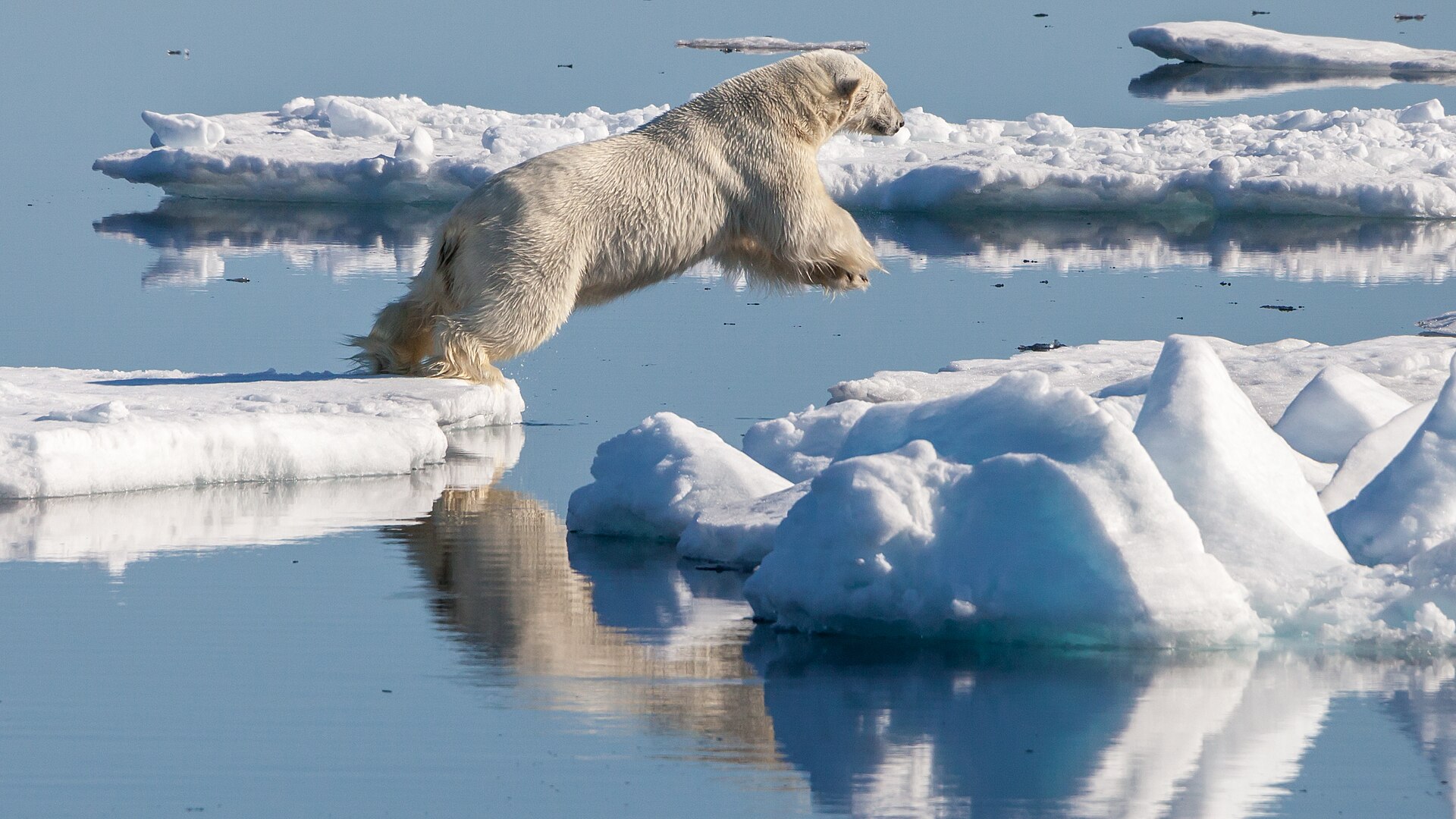
Polar bears spend summer hunting along the pack ice edge, concentrating north and east of Svalbard as the ice retreats
Where to Find Polar Bears in Svalbard
Three zones account for most polar bear sightings on Svalbard expedition cruises, each with a different access profile depending on ice conditions and itinerary length.
- Pack ice edge (north/northeast) Bears hunt ringed seals at the ice edge, their primary summer habitat. Ships cruise north toward 80-82 degrees latitude to find the ice edge, roughly 300-500+ nautical miles from Longyearbyen depending on ice conditions that season.
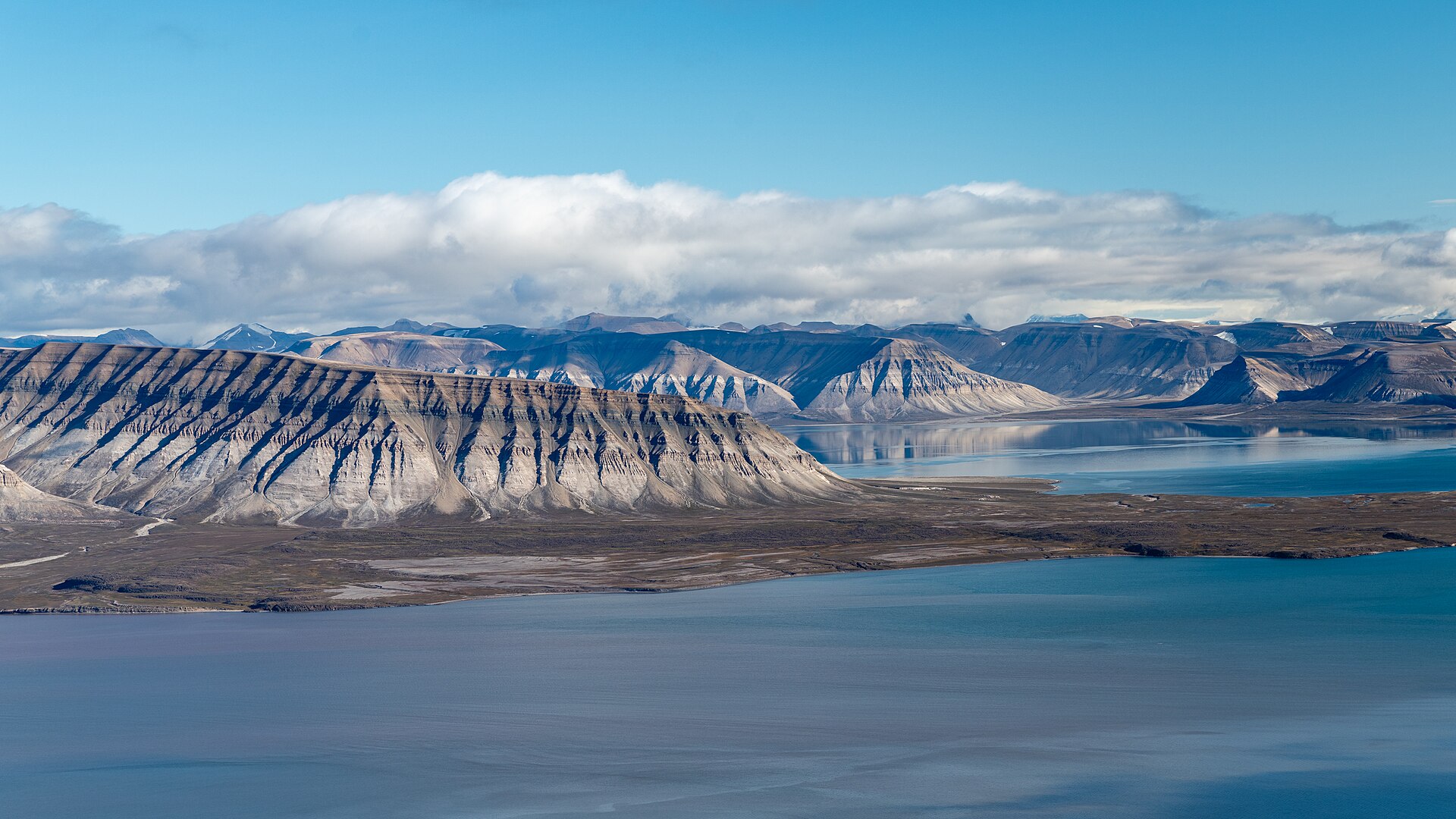
- Northwest Spitsbergen National Park Deep fjords, tidewater glaciers and the Alkefjellet bird cliffs draw bears patrolling the coastline. This is a key area for nearly all expedition cruise operators and is accessible from Longyearbyen in 1-2 days.
- Kvitoya (White Island) The most remote island in the archipelago, roughly 80 percent ice-covered and the final resting place of the Salomon August Andree balloon expedition of 1897. Rarely visited, but bear density is exceptional when it is accessible - only reachable on 13-14 day circumnavigation itineraries.
Svalbard's Latest Regulations: What Changed and Why It Matters
This guide reflects the latest Svalbard regulations currently in force, amended by the Norwegian government under the Svalbard Environmental Protection Act. The rules below took effect on 1 January 2025 and remain current as of this guide's last update; always confirm the current requirements at the primary source, regjeringen.no, before booking. These changes affect every expedition cruise operator and directly reshape polar bear viewing opportunities across the archipelago.
Svalbard Regulations: Currently in Force
All AECO-member and independent operators alike must comply with these rules when operating in Svalbard waters and protected areas. Rules took effect 1 January 2025 - see the official source for updates.
| Rule | Detail | Source |
|---|---|---|
| Minimum distance to polar bears (Jul 1 - Feb 28) | 300 meters - from ship, Zodiac or on land | Norwegian Ministry of Climate and Environment |
| Minimum distance to polar bears (Mar 1 - Jun 30) | 500 meters - stricter spring rule protects denning mothers | Norwegian Ministry of Climate and Environment |
| Passenger limit in protected areas | Maximum 200 passengers on board in all protected areas | AECO / Norwegian Parliament |
| Landing sites in protected areas | Only 43 designated sites permitted; all others prohibited | Norwegian Ministry of Climate and Environment |
| Drones | Prohibited in protected areas and within 500m of bird colonies | AECO |
| Fast ice breaking | Generally prohibited (exceptions for main shipping routes) | Norwegian Ministry of Climate and Environment |
What This Means for Tourists
- Ships over 200 passengers cannot enter protected areas at all - a major limitation for large cruise ships visiting Svalbard
- The 300m distance rule reduces the closest possible bear approaches compared to pre-2025 norms - binoculars and telephoto lenses are now essential, not optional
- Smaller ships under roughly 100-114 passengers retain full access to all 43 designated landing sites without capacity-sharing rotations
- Drones cannot be used to photograph wildlife - factor this into photography planning before departure
Choosing a Svalbard Polar Bear Tour Operator: The Key Variables
AECO membership, ship size relative to the 200-passenger limit, whether the route reaches the pack ice, tour duration and the naturalist team's expertise are the variables that separate a strong Svalbard polar bear tour operator from a weak one after 2025.
- Ship passenger count vs the 200-pax limit - ships under 100 passengers retain full flexibility; the 100-200 range stays compliant; anything over 200 cannot enter protected areas at all
- AECO membership and compliance - verify directly at aeco.no before booking; AECO members are bound by distance rules and wildlife guidelines
- Ice edge access in the itinerary - does the route go above 80 degrees north to reach pack ice? This is the key variable for bear sighting probability
- Duration - 8-day tours reach the western coast; 12-14 day circumnavigation tours reach Kvitoya and the northern pack ice, where sighting probability is highest
- Expert naturalist team - a dedicated wildlife spotter on the bridge, an ornithologist and an Arctic biologist onboard all improve the odds of a well-timed sighting
Operator Comparison Table 2026-2027
Click any column header to sort. Prices and specifications change seasonally - verify current figures directly with each operator before booking.
| Operator | Ship | Max Pax | Tour Length | Price From (USD) | Pack Ice Access | AECO Member |
|---|---|---|---|---|---|---|
| Poseidon Expeditions | M/V Sea Spirit | 114 | 8-14 days | from US$7,221 | Yes - north/northeast | Yes |
| Quark Expeditions | Ultramarine | 199 | 8-17 days | from US$6,431 | Yes | Yes |
| Lindblad Expeditions | Nat Geo Resolution / Endurance | 126-148 | 9-10 days | from US$13,182 | Yes | Yes |
| Oceanwide Expeditions | Hondius / Plancius | 108-174 | 7-16 days | from US$4,500 | Yes | Yes |
| Aurora Expeditions | Greg Mortimer / Douglas Mawson | 130 | 12 days | from US$14,074 | Yes | Yes |
| Hurtigruten (HX) | Fridtjof Nansen | 500 | varies | from US$19,050 | Limited - over 200 pax limit | Yes |
All prices should be verified directly with operators - prices change seasonally and by cabin category.
Ship Size and Svalbard's Latest Regulations: Why It Matters More Than Ever
Before 2025, ship size mostly affected the quality of the onboard experience. Now it determines legal access. Vessels carrying more than 200 passengers cannot enter protected areas at all - and that is precisely where Svalbard's polar bears are concentrated.
Under 100 passengers - Maximum flexibility
Full access to all 43 designated landing sites. Continuous deck watch for bear spotting. All guests ashore simultaneously with no rotations needed. Example: Oceanwide's Plancius (108 passengers).
100-200 passengers - Compliant, some rotation
Still within the 2025 protected area limit. Landing rotations are needed at smaller sites. Examples: Poseidon's Sea Spirit (114), Quark's Ultramarine (199), Lindblad's Resolution (126).
Over 200 passengers - Cannot enter protected areas
Excluded from all national parks and nature reserves since 1 January 2025. Cannot make landings in the most wildlife-rich zones. Bears are viewable only from ship in unprotected waters.
Wildlife Beyond Polar Bears: What Else to Expect on a Svalbard Tour
Svalbard is not only about polar bears. A well-run itinerary exposes travelers to a much wider range of Arctic wildlife across fjords, tundra and pack ice.
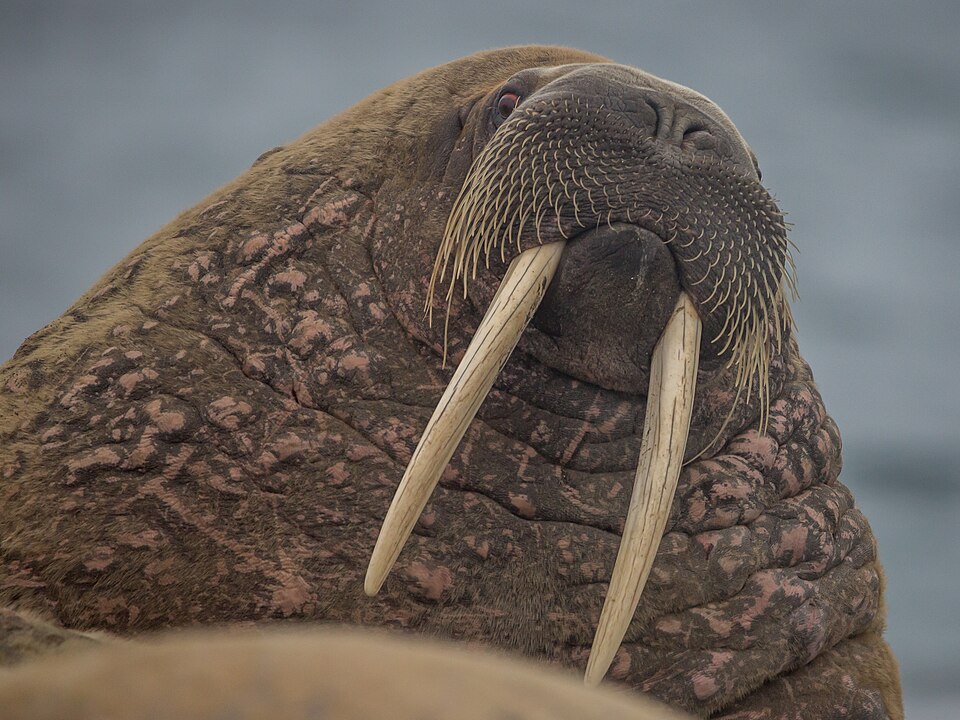
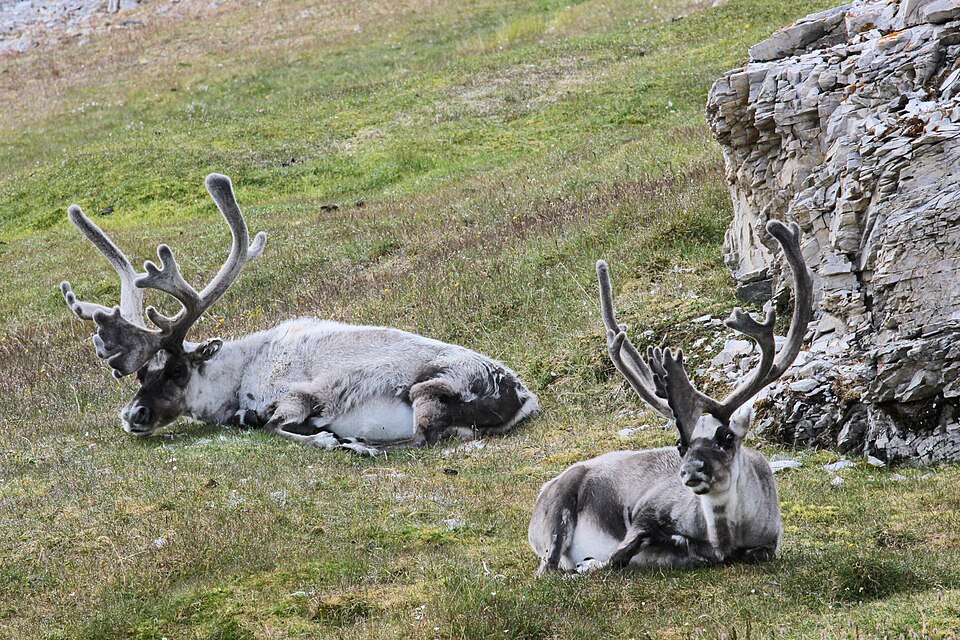
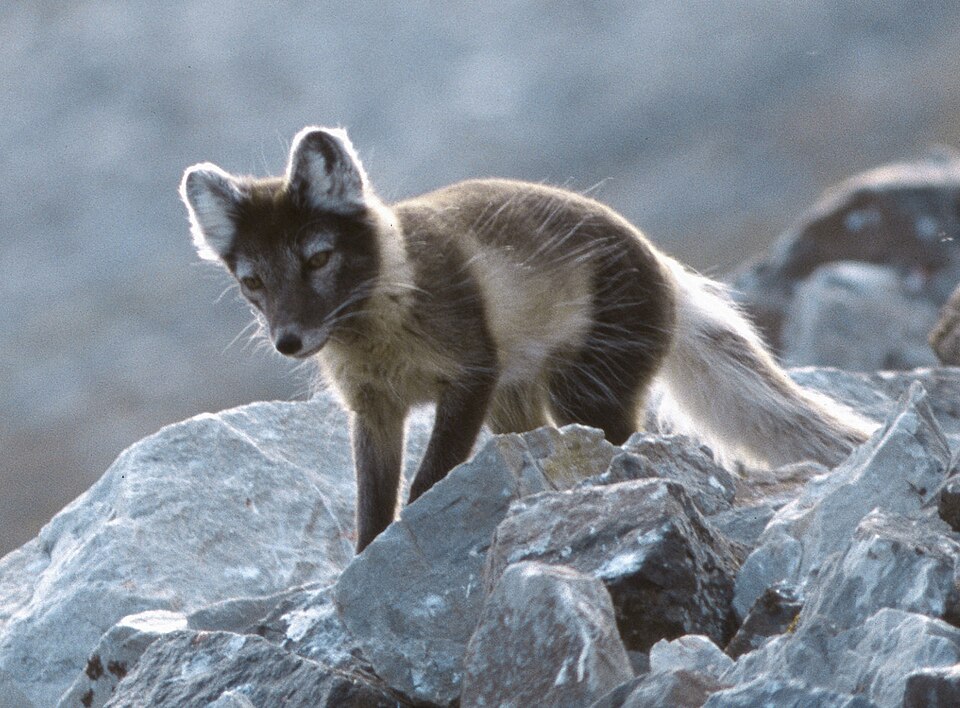
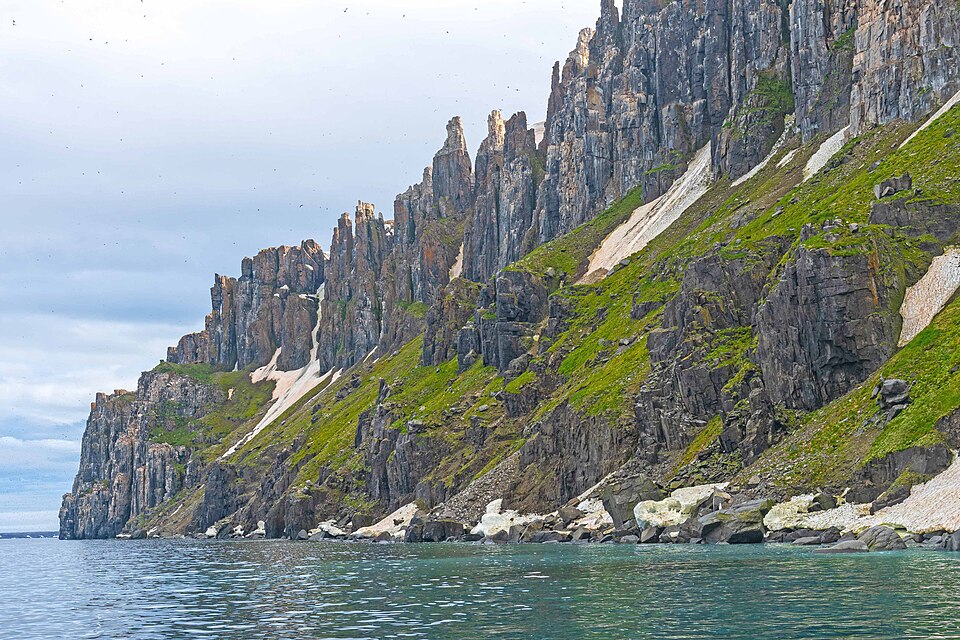
- Walrus colonies - hauled out on beaches at Poolepynten and other sites, sometimes numbering in the thousands
- Svalbard reindeer - an endemic subspecies, smaller and stockier than mainland reindeer, grazing on tundra near most landing sites
- Arctic fox - grey-brown summer coat, often seen near ships and camps and photographed at close range
- Beluga whales - small white whales in fjords, especially in Svalbard's north and east
- Seabirds at Alkefjellet - Little Auk in the millions of breeding pairs, alongside Brunnich's Guillemot, Puffin and Kittiwake
- Humpback and minke whales - feeding along the pack ice edge alongside bears
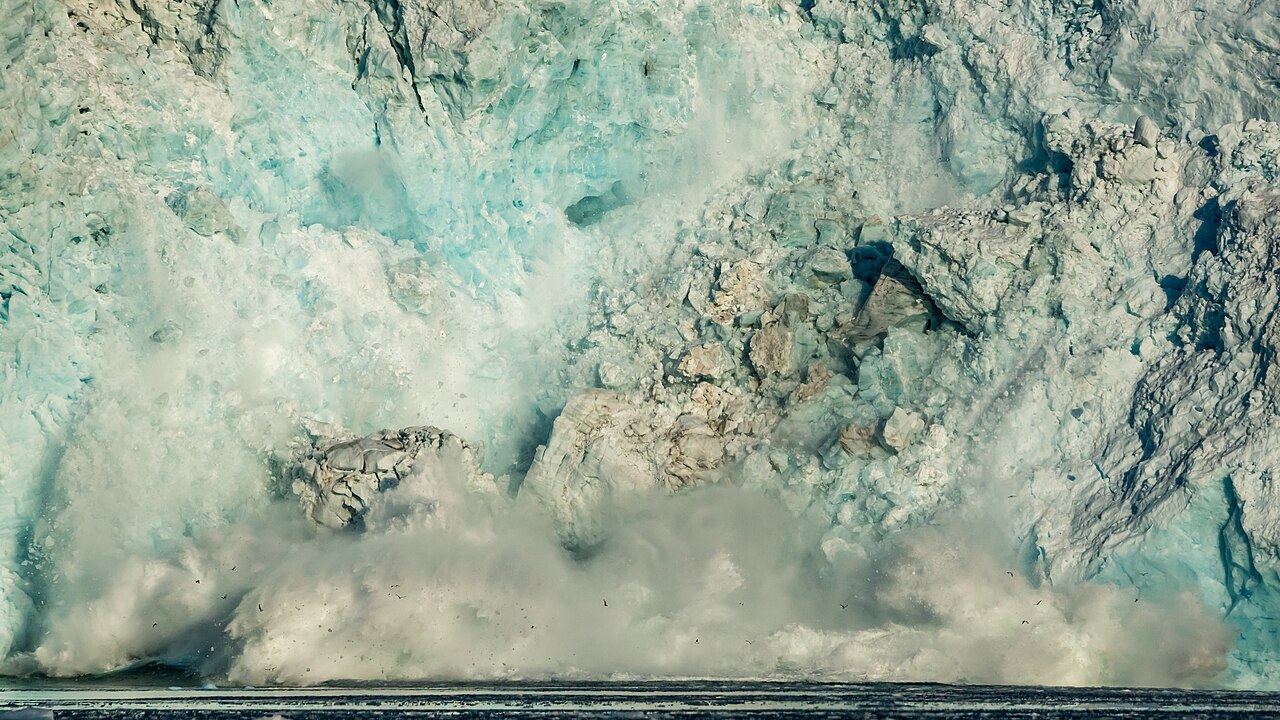
- Tidewater glaciers - calving events viewed from the deck, plus Zodiac cruising at glacier fronts
- Midnight sun - 24-hour daylight from April through August, with unique photography light around 2-3am
Wildlife Photography Tips for a Svalbard Polar Bear Tour
The 2025 distance rules changed what equipment and technique actually work for polar bear photography in Svalbard. These practical notes reflect that shift.
- A telephoto lens is mandatory - the 300m minimum distance rule means bears appear small without 400-600mm equivalent reach; a crop-sensor camera with a 100-400mm lens gives roughly 640mm effective reach
- Shoot at midnight - from June to August, low-angle midnight sun creates warm golden light even at 1-2am, and polar bears on white ice photograph best in this light
- Ask about bridge access - many AECO operators allow guests on the bridge during wildlife spotting; confirm this specifically before booking
- Use a bean bag over a tripod - ship motion and railing support make bean bags more practical than tripods for telephoto work
- Leave the drone at home - prohibited in all protected areas and within 500m of bird colonies since 2025
- Patience beats positioning - bears at the pack ice can take 2-4 hours to approach; binoculars are essential for scanning before a bear comes within camera shooting distance
How to Get to Svalbard for a Polar Bear Tour
Longyearbyen is the only airport in Svalbard with regular commercial service, connecting to Oslo and Tromso. Nearly every expedition cruise begins and ends here, and it serves as the administrative center of the archipelago and the primary departure point for all expedition cruises. Some operators include the Oslo-Longyearbyen flight in the total tour price; others require it to be booked separately.
Cost of a Svalbard Polar Bear Tour: What to Budget
Prices vary widely by ship, cabin category and itinerary length. The ranges below reflect typical market positioning as of this guide's last update.
| Tour Type | Duration | Price Range per Person |
|---|---|---|
| West Svalbard - short | 7-10 days | approx US$4,500-13,500 |
| Circumnavigation with Kvitoya | 12-15 days | approx US$12,000-19,500 |
| Luxury / premium operators | 10-14 days | approx US$19,000-30,000+ |
Typically included: all meals, Zodiac landings, lectures from the expedition team, and expedition parka.
Typically not included: international flights to Oslo, travel insurance, and optional activities such as kayaking.
Always verify directly with operators - prices change seasonally and by cabin category.
Preparation Checklist for a Svalbard Polar Bear Tour
- Book 12-18 months in advance for summer peak season (July-August) departures
- Arrange travel insurance with medical evacuation coverage of at least US$100,000
- Pack a telephoto lens of 400mm+ equivalent for the 300m bear distance rule
- Bring binoculars rated 8x42 or 10x42 minimum; bear scanning from the deck is a primary activity
- Plan a layering system: waterproof outer shell, mid-layer fleece, thermal base; rubber boots are provided by most operators
- Leave the drone at home - prohibited in all protected areas since 2025
- Prepare for seasickness - Svalbard routes are calmer than the Drake Passage, but fjord crossings can still be rough
- Verify AECO membership at aeco.no before placing a deposit
Svalbard Polar Bear Tour vs Other Arctic Bear Destinations
Svalbard is not the only place to see polar bears in the wild. Churchill in Canada and Franz Josef Land in Russia offer different access models and seasons.
| Destination | Season | Access | Best For |
|---|---|---|---|
| Svalbard, Norway | June-August (ship) | Direct flights from Oslo; small ship expedition | Pack ice bears; midnight sun photography |
| Churchill, Canada | October-November (land) | Charter flights from Winnipeg; tundra buggy | Pre-freeze bears on tundra; aurora |
| Franz Josef Land, Russia | July-August (ship) | Expedition ship from Murmansk; access status | Remote; very high bear density |
| Northeast Greenland | July-August (ship) | Expedition ship; fly-in options | Bears plus musk ox and fjord scenery |
Common Misconceptions About Svalbard Polar Bear Tours
- "It's a polar bear safari." No - bears are not baited or guaranteed. This is wildlife observation in a genuinely wild environment.
- "Any cruise ship will do." No - ships carrying more than 200 passengers cannot enter protected areas since 2025.
- "Summer is too bright to see bears." No - the midnight sun creates some of the best light of the season for photography.
- "Drones capture the best shots." No - drones have been prohibited in protected areas since 2025.
- "A shorter tour means more bears." No - 13-14 day itineraries with Kvitoya access generally report the highest sighting probability.
Reading Conditions on the Day: What Guides Actually Look For
Expedition teams monitor daily ice charts, track movement along the ice edge and watch for ringed seal behavior, the primary prey species that draws bears to a given stretch of ice. Officers and naturalists scan continuously from the bridge with binoculars, often before any announcement is made to guests.
The realistic expectation: sometimes a bear is spotted within the hour, and sometimes two full days pass at the ice edge without an encounter. Patience is not optional on a Svalbard polar bear tour, it is a requirement. The pack ice environment itself, the light, the silence, the scale, is an experience in its own right even on the days a bear does not appear
Conclusion
Svalbard remains the best place in the world to encounter polar bears in the wild. The 2025 regulations changed the rules of the game: ship size now determines legal access, not just the quality of the experience. The right operator, a route with genuine pack ice access, and the right season (June through August) are the three variables that maximize the probability of a Svalbard polar bear tour encounter.
Review the full methodology behind this guide for how operators and data points were verified.